Mental health awareness: coping strategies for social media burnout
Mental health awareness: coping strategies for social media burnoutThis article dives deep into mental health awareness around social media burnout. We’ll discuss its causes, symptoms, coping strategies, bonus tips, common mistakes people make, real-life examples, frequently asked questions, and practical ways to create a healthier balance.
10/2/20256 min read
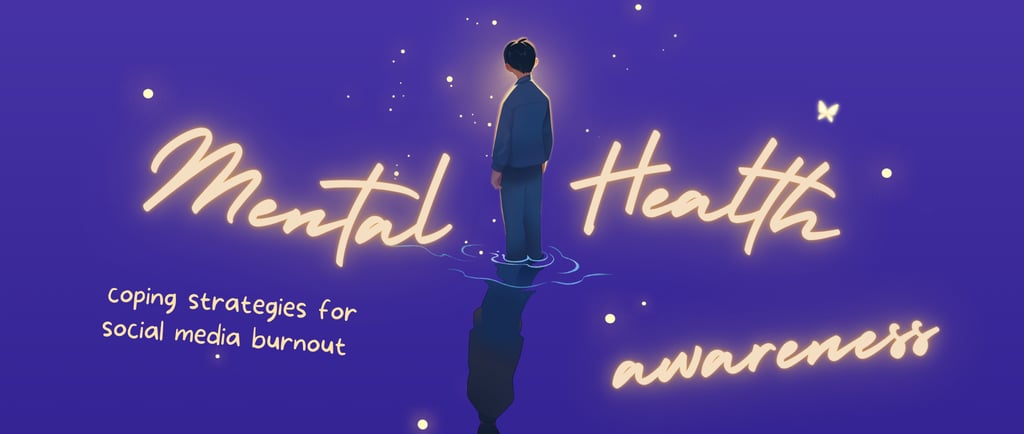
Mental Health Awareness: Coping Strategies for Social Media Burnout
Introduction
We live in a world where checking social media has become as natural as drinking water. Whether it’s scrolling through Instagram reels, liking photos on Facebook, catching up with news on X (formerly Twitter), or watching YouTube shorts, our lives are increasingly defined by digital interactions. According to Statista (2025), more than 5.17 billion people worldwide use social media, with the average person spending 2.5 hours per day across platforms.
On the surface, this digital world connects us, entertains us, and even offers new ways to work or build businesses. But behind the screens, there’s a hidden cost: social media burnout.
Social media burnout is not simply about spending “too much time online.” It’s a deeper form of mental, emotional, and even physical exhaustion caused by over-engagement with digital platforms. Instead of feeling connected, people often feel anxious, drained, and unmotivated. Left unaddressed, burnout can lead to serious mental health challenges such as anxiety disorders, depression, poor self-esteem, and sleep problems.
This article takes a comprehensive look at the issue of social media burnout. We’ll cover:
What social media burnout is and why it matters.
Symptoms and causes based on psychology and research.
20+ coping strategies you can apply today.
Bonus tips for long-term balance.
Common mistakes people make when trying to manage digital stress.
Real-life examples that make this relatable.
An extended FAQ section.
A conclusion that ties everything together.
By the end, you’ll not only understand the problem but also walk away with actionable steps to protect your mental health in the digital age.
Understanding Social Media Burnout
What is Social Media Burnout?
Burnout is traditionally defined as a state of chronic stress leading to emotional exhaustion, depersonalization, and reduced performance. When applied to social media, it means feeling mentally drained, overstimulated, and emotionally exhausted from constant digital engagement.
It’s that feeling of being glued to your phone, yet not enjoying it. Even when you log out, your brain keeps thinking about posts, likes, or notifications.
Unlike ordinary fatigue, burnout is more persistent and can affect multiple areas of life—academic performance, work productivity, relationships, and even physical health.
Psychological Causes
Comparison Trap – Social media highlights “perfect” lives, making us feel inadequate.
Dopamine Loop – Likes and shares create addictive reward cycles, keeping us hooked.
Information Overload – Too much content overwhelms the brain, leading to fatigue.
Fear of Missing Out (FOMO) – Anxiety when we’re not constantly connected.
Validation Culture – Tying self-worth to online engagement numbers.
Work & Content Pressure – For creators and entrepreneurs, social media becomes a job, not just fun.
Symptoms of Social Media Burnout
Mental Symptoms: Anxiety, low focus, irritability, loss of interest in offline activities.
Emotional Symptoms: Mood swings, frustration, feelings of inadequacy, sadness.
Physical Symptoms: Headaches, eye strain, poor sleep, lethargy.
Behavioral Symptoms: Compulsive checking, endless scrolling, neglecting tasks, avoiding face-to-face interactions.
The Mental Health Impact
Social media burnout directly affects mental health:
Anxiety Disorders: The constant “always on” feeling increases stress hormones.
Depression: Comparison and negative interactions reduce self-esteem.
Isolation: Ironically, being “too connected online” often reduces real-world relationships.
Sleep Disorders: Blue light exposure and late-night scrolling disrupt circadian rhythm.
Research & Statistics
73% of social media users admit to experiencing some form of digital stress (American Psychological Association, 2024).
A study from the University of Pennsylvania found that limiting social media use to 30 minutes per day significantly reduced levels of loneliness and depression.
Teens spending more than 3 hours daily on social media are at a 60% higher risk of mental health issues (JAMA Pediatrics, 2023).
✅ Awareness is the first step. Once you recognize the problem, you can start implementing strategies to cope with it.
20+ Coping Strategies for Social Media Burnout
Here’s a detailed guide with actionable methods:
1. Set Clear Boundaries
Use app timers or built-in phone features to cap daily usage. Example: 1 hour/day limit for Instagram.
2. Curate Your Feed
Unfollow toxic or negative accounts. Follow people who inspire, educate, or uplift you.
3. Take Scheduled Breaks
Start small: no-phone mornings or 2-hour evening breaks. Build up to weekend detoxes.
4. Use Social Media Intentionally
Before logging in, ask: What’s my purpose? If you can’t answer, skip it.
5. Turn Off Notifications
Constant pings increase stress. Turn off all non-essential notifications.
6. Practice “Digital Fasting”
Just like fasting from food, take time away from all apps to reset your brain.
7. Prioritize Offline Hobbies
Replace scrolling with activities like reading, sketching, or outdoor sports.
8. Engage in Real Conversations
Make time for face-to-face interactions. Offline friendships are more nourishing than online likes.
9. Shift from Consumption to Creation
Instead of passively scrolling, create meaningful content or share your authentic thoughts.
10. Schedule “Social Media Hours”
Only check platforms during fixed times, e.g., 1 pm and 7 pm.
11. Use “Do Not Disturb” Mode
Activate it during sleep, work, or study hours.
12. Track Screen Time Weekly
Review how much time you’re spending. Awareness creates accountability.
13. Avoid Scrolling Before Bed
Replace it with a night routine like reading or journaling.
14. Practice Mindfulness & Meditation
Mindful breathing or meditation reduces overstimulation caused by constant scrolling.
15. Practice Gratitude
Write down 3 positive things daily. This reduces the negative effects of comparison.
16. Batch Content Creation
For creators: schedule posts in advance so you’re not online 24/7.
17. Redefine Success
Stop tying self-worth to likes or followers. Focus on quality connections.
18. Seek Therapy or Support Groups
If burnout leads to depression, professional help is essential.
19. Use Apps that Block Social Media
Tools like Freedom or StayFocused help enforce boundaries.
20. Reward Yourself for Balance
Celebrate small wins: “I stayed offline for 3 hours today—let’s enjoy a book!”
21. Educate Yourself
Read about digital well-being. Knowledge empowers you to make better choices.
Bonus Tips for Long-Term Digital Balance
Adopt Digital Minimalism: Use fewer apps, focus on quality.
Try a Social Media Sabbath: One day per week completely offline.
Replace Morning Scroll with Morning Ritual: Exercise, journaling, or meditation.
Keep Devices Away During Meals: Encourage mindful eating and real conversations.
Use Two Phones: One for work/social media, one for personal life.
Common Mistakes People Make
Replacing one app with another (delete TikTok, binge YouTube).
Relying on short detoxes instead of building long-term habits.
Scrolling before bed—destroys sleep quality.
Seeking validation—measuring self-worth by engagement.
Ignoring early warning signs of stress until it worsens.
Real-Life Examples
Case Study 1: Student Burnout
Sara, a 20-year-old student, spent 7 hours daily online. Grades dropped, and she felt worthless. After a 2-week detox and joining a book club, her focus and mood improved.
Case Study 2: Entrepreneur Overload
Ali, a small business owner, faced burnout from constant posting. By batching content weekly and setting evening boundaries, he regained energy and grew his business sustainably.
Case Study 3: Remote Worker
Maria used social media as “short breaks” during work but ended up wasting hours. After using productivity apps and moving her phone out of her bedroom, her sleep and efficiency improved.
FAQ
Q1. How do I know if I’m burned out?
If social media leaves you drained instead of energized, you’re likely experiencing burnout.
Q2. Should I quit social media entirely?
Not always. For most people, balance—not quitting—is the key.
Q3. How many hours on social media per day are actually healthy?
Experts recommend 1–2 hours daily. More than 3 hours significantly increases risk of mental strain.
Q4. What if my career depends on social media?
Tools such as Buffer, Hootsuite, and Meta Business Suite can help you schedule posts in advance. Separate work from personal time.
Q5. Can burnout cause depression?
Yes. Prolonged stress and comparison can lead to anxiety, depression, or isolation.
Q6. How do I avoid comparing myself to others?
Unfollow unrealistic accounts. Remind yourself: people post highlights, not full realities.
Q7. What’s the first step to recovery?
Awareness—recognizing that burnout exists and acknowledging your need for change.
Q8. How do parents help kids avoid burnout?
Set screen time limits, encourage offline hobbies, and talk openly about online pressure.
Q9. Can therapy help digital burnout?
Absolutely. Therapists can provide coping strategies tailored to your situation.
Q10. Is social media all bad?
No. It’s a tool. When used mindfully, it brings education, opportunity, and connection. The problem is overuse.
Conclusion
Social media is neither good nor bad—it’s a tool. But just like any other tool, the results depend on how we choose to use it. Overuse leads to burnout, anxiety, stress, and depression, while mindful use can inspire, educate, and connect us.
Awareness is the first step. By recognizing symptoms, setting boundaries, practicing mindfulness, and reconnecting with offline life, you can protect your mental health while still enjoying the benefits of digital platforms.
Your self-worth is not defined by likes, followers, or views. It’s defined by your values, your happiness, and your relationships in the real world.
So today, make one small change: set a timer, log off early, call a friend, or step outside. These small choices add up to a healthier, happier life.
👉 Call to Action: Save this article, share it with someone struggling with burnout, and start your journey toward digital balance today.